Signal Talks: A Conversation with Fountain House Harlem Clubhouse Director Jane Clinger
This week, we are presenting two special conversations we had at New York City's Fountain House.
Welcome back to our series, Signal Talks, presented by Mindsigns Health™. This week, we are presenting two special conversations we had at New York City’s Fountain House.
Founded in 1948 in New York City, Fountain House originated the clubhouse model of community mental health that has been replicated more than 300 times in nearly 40 U.S. states and in 31 countries around the world. - Fountain House website
You can learn more about Fountain House here: www.fountainhouse.org
Beyond the insights we get from clinicians and fellow collaborators, we’ve always found conversations like the ones at Fountain House to be just as, if not more, impactful. There’s a level of honesty in the perspective of “lived experiences” you can’t get elsewhere. We were very grateful that we had a chance to speak with two people at Fountain House last week.
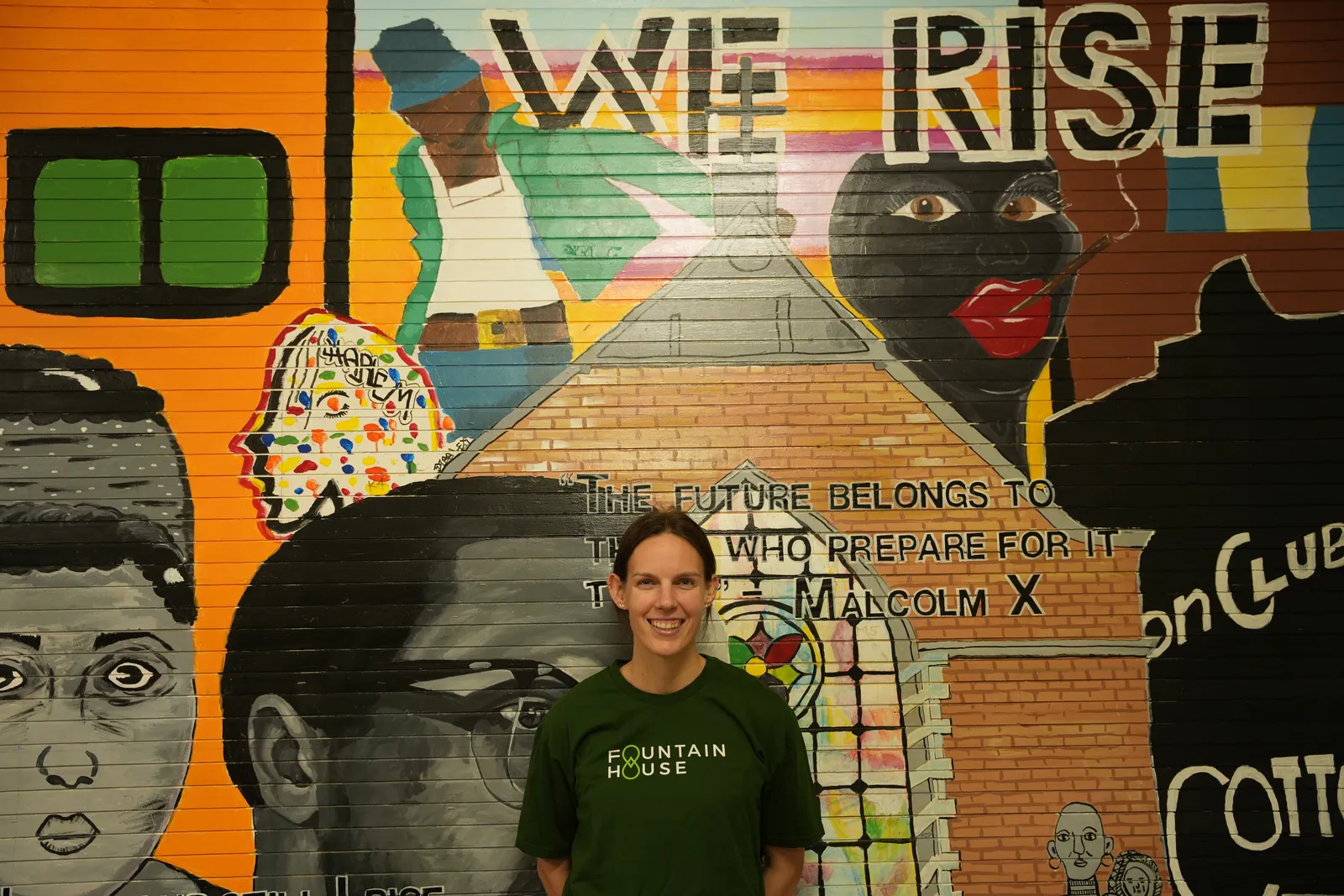
Our first conversation was with the Clubhouse Director of Fountain House Harlem, Jane Clinger, LMSW.
Note:This interview has been edited and condensed for clarity.
We are at Fountain House up in Harlem and I am sitting with Jane. How long have you been director Jane?
I have been the clubhouse director since Fountain House Harlem was a thought. We were awarded a contract by the city back in fall 2024. There was an idea about expanding the clubhouse and they hired me to help kind of lead this initiative, but this was even before we had a building. So I started, basically since 2024. We worked from being an idea to the final stages of acquiring the St. Andrews Church, and then moving in here and being a complete renovation project. So now it’s been a year and a half I’ve been in this role, but I’ve been with Fountain House since 2018. I started as a line staff, as a social practitioner, got promoted to a program director, and now honored with this role.
We’ve just wrapped up Mental Health Month. Awareness can fade in this fast-paced world. What does sustained, year-round advocacy look like to you?
Working here in a community, we’re all about it being a marathon, not a sprint. We’re all about little actions making the difference over a long time. It’s not just doing one big action here that makes a community a community. It’s about us continuing to show up for each other and being there for one another. I think sustained advocacy doesn’t have to just be like one big flashy event once every 10 years. It’s the little things over time: getting connected, sustainably being committed. And that can look different for different people. It could be supporting people in your personal network, who might need someone, who needs some support. It might be getting involved with advocacy walks, just getting involved, sharing content, help raise awareness. I love being involved in this way of being here in the clubhouse. This is my heart and soul. So for me, I never turn off my mind about the clubhouse. It’s also about sustainability. You can’t burn yourself out in the advocacy. So try to make efforts and take care of yourself in the process.
I think of the word consistency based on what I’m hearing. When I walked in, I felt a very warm welcome. And I feel like people getting that welcome every day for whoever’s here on the daily basis, I think it hits hard like by in a good way. It’s meaningful to these people.
Fountain House is open 365 days a year. We are open for major holidays. We have events on weekends and evenings because mental illness doesn’t just only fit into one therapy session. It doesn’t fit into, you see a psychiatrist once a month and it just fits in a nice little box. We really care about our community over a long period of time. On the holidays when you might feel more isolated, on the weekends when you feel like everyone’s hanging out without you. Like, we want to be there in people’s good times and people’s bad times and that’s consistency and commitment and leaning on each other. And I don’t think we pretend to be perfect, and I don’t think we pretend to be experts in any way. We’re just a community of committed individuals who really care about community and lifting each other up. We all lean on each other and ask each other for help and I think that’s also important for consistency. You don’t have to be in it alone. And that’s what will be able to sustain you being asked for help. And modeling that, I think, is also really powerful for others.
Stigma is still quite present around mental illness. What has been effective in breaking them down?
I think that’s one of the reasons why a diagnosis of mental illness can be so isolating and can be so devastating when someone gets a diagnosis is the isolation. There is stigma attached to it. You’re like, oh my god, what does this mean for my life? What does this mean for my goals? For my future? Here, when you walk through the doors, you’re seen as a person first. It’s all about people’s strengths, people’s talents, people’s abilities. We break down the stigma amongst folks internally because we help remind people that you’re still a person, just because you have a mental illness, just because you have a diagnosis. That’s the component of your life that you’re navigating with right now. And remembering that you’re still you. It can be a part of you and it might be taking up a lot of energy and bandwidth in your life right now. It can be very significant and disruptive. But here we try to make sure people remember that, I’m still Jane. You’re still Kevin, everyone is still themselves. We always try to get that human connection because mental illness doesn’t discriminate. Anybody can experience mental illness. The more you humanise it, the more you realise that people are people living with mental illness instead of the narrative of someone being a mentally ill person. If you don’t talk to people, you don’t get to know people who live with mental illness, to understand that it’s an illness that someone’s navigating right now.
You talk a lot about community. Fountain House’s mission is about community. For those unfamiliar, how would you explain why the community approach so effective for people?
Yeah, I always say Fountain House… It’s not the whole puzzle, but it’s an important piece in the puzzle and folks’ recovery journey. And I feel like not only is community, it’s not just about having people with you, but community is reciprocal in nature. A community is a give and take. We are involved in a community because we care about one another. And when folks feel and see being in a community working together helping one another, that’s transformative, that’s someone who may have been in and out of institutions cycling through a hospital. It’s hard sometimes not to feel like you’re just stuck in these systems, but when you add in the community component of Fountain House, we’re an intentional community where this clubhouse would not run if it weren’t for the members coming in here.
And this clubhouse is free and it’s voluntary. And, you know, we’re a non-profit. We’re doing it because we care about the lives of folks. And I feel like that’s an important piece in the mental health journey because if you’re sitting with a therapist or psychiatrist, you can have that conversation, but here we get to see it. We’re here 9 to 5 Monday through Friday on weekends, on holidays, and you see those contributions over time and can reflect that back to somebody and be like, wow. You’re a part of this. When you’re not here, we notice. Like the outpour of support and the encouragement, I think that’s transformative. And I think that often, that’s a piece that’s missing in the mental health narrative of what are things that help someone feel supported and live full, balanced lives.
Yes, having a purpose and then beyond just community, but making impact, having impact, receiving that impact.
And you deserve it. And like letting folks know that you deserve it. You deserve to be part of the community and you deserve it when we cook up a nice meal. You deserve to enjoy it. You deserve to be at the table and we’re happier here.
So, from the length or type, what specifically do you wish people should know more about the recovery process?
What I’ve learned over the years through being in this amazing community is you can’t think of recovery as just like binary. It’s not you’re all in or you’re all out. Recovery, I think, is navigating. When navigating parts of an illness that can have a significant impact on your life and helping feel like you have the right support in place. You have the right tools in your toolkit and being able to use them to then go forward whatever your goals are, but goals are don’t look the same for everyone. The tools don’t look the same for everyone. Sometimes a tool that you’re using this time now isn’t working anymore given your circumstances and your new stressors. So I think recovery is very complex, but it also is beautiful. And it also, is not something that’s unattainable, I think there’s small wins along the way, and it doesn’t always need to be something always pretty tied up with a bow. I think recovery is, like we said, consistency, commitment showing up on time. And for some folks, that’s just being the best friend you can be to another person. It could be reconnecting with a family member. It could be going back to school. It could be going back to work. But I think like being a part of this community, I’ve just learned that recovery means something different to everyone and who am I to really define it? I just want to help people live their best lives and whatever challenges are kind of in your way. We’re going to work as a team to help navigate them. No shame.
What do you think we need to do better? As a community.
I just feel like there’s some narratives that go on in society that are just like really dehumanising around mental illness. And it just seems like there’s a lack of knowledge about what mental illness really is and how mental illness can impact anyone and people might just need the right tools and support to move forward. And we as a society need to advocate because it’s not as easy as you just take one pill. It’s complicated and we need everybody involved in it and kind of dehumanising people in the process isn’t going to help anyone. Remembering that we’re all a part of one big community gathered in New York City. These could be someone who looks like they’re struggling, that could be your sibling, that could be your co-worker, that could be your friend, that could be anyone. We’re just in this together.
Is there anything else you’d like to share?
I love our community. I find when people find out that I work in mental health, a lot of folks are like, oh my god, it must be so challenging. I guess it is, because we care, if you care about anything, it’s going to be challenging. We have a lot of fun here. We have a lot of joy here. I think folks in our community really see each other as people. I think maybe because of people’s experiences with feeling the stigma. I see people here cheer me on, cheer each other on. I’ve become a better director through being in this community. I want to share something about how the community can be a really joyful thing and… I love it here. I’m proud of what we do and we’re building something really special and I’m proud to be a part of Fountain House.
What’s your why?
This is just the world I want to live in. This is just aligned. I feel like everybody deserves to be treated with dignity and respect. I think throughout my life, I definitely felt experiences where I felt less than, felt not included. I feel like this is just a very human feeling of wanting to be a part of a community. I feel like especially understanding how serious mental illness can really make you feel. This feels like the world I want to help create.
Up next, we had the opportunity to speak with Fountain House member, Nelson. To our readers, thank you for joining us for our latest edition of Signal Talks, presented by Mindsigns Health™. Stay tuned for Thursday’s article.


