Neuropsychiatric Care: A Conversation with Dr. Manu Sidhu
Signal Talks opens with Dr. Manu Sidhu, medical doctor and clinical researcher, on neuropsychiatry and the role of technology in mental health care.
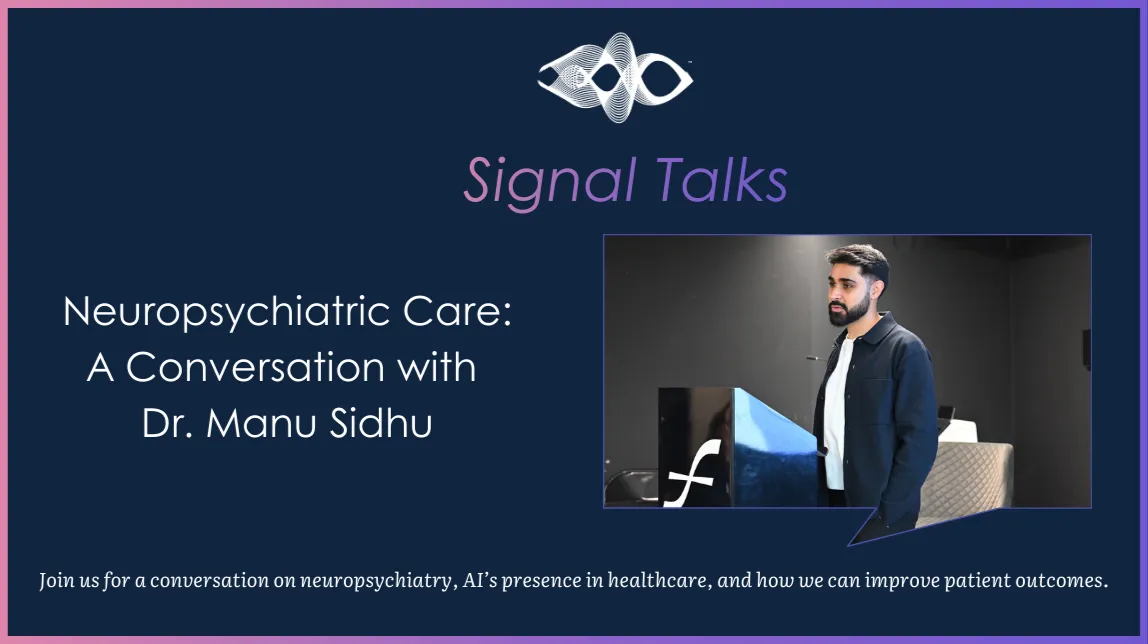
Welcome to our new series, Signal Talks, presented by Mindsigns Health™. Here, we speak with stakeholders in the medical-tech industry on what they’re seeing, and what they hope to achieve in the future.
As part of Mental Health Month, we have the pleasure of discussing neuropsychiatry with Dr. Manu Sidhu. Dr. Sidhu is a medical doctor, clinical researcher, and technology proponent specialising in mental health.
Dr. Sidhu, could you tell us a little bit about neuropsychiatry?
Neuropsychiatry is the bridge between psychiatry and neurology, understanding the mind and brain as a partnership rather than as separate disciplines. In practice, this involves working with patients with mental disorders which originate from a brain malfunction.
How does it differ from traditional mental health treatment?
In “traditional” mental health treatment, we often rely heavily on symptoms, observation, and self-report. Then, we apply evidence-based treatments (medication, psychotherapy, social interventions).
Neuropsychiatric care includes all of that, but adds a stronger emphasis on:
- Measurable neurocognitive and neurophysiological function (e.g. attention and arousal)
- Brain–body interactions (e.g. sleep and autonomic regulation)
- The ways neurological factors can drive psychiatric symptoms (e.g. epilepsy, brain injury, encephalitis, movement disorders, functional neurological disorders)
Neuropsychiatric care can be seen as more “personalised”. What does this look like in practice?
“Personalised” means moving from one-size-fits-most to a data-informed formulation and treatment plan, tailored to the individual’s pattern. That typically looks like:
- Richer phenotyping: combining symptoms, cognition, sleep, circadian rhythm, stress physiology, and functional impact (work, relationships, self-care).
- Measurement-based care: tracking response early and adjusting sooner, rather than waiting months to determine clinical response.
- Targeted interventions: for example, with more stratified data, we can target circadian rhythm when arousal dysregulation is the driver, or prioritise cognitive remediation when executive dysfunction is the bottleneck.
How do patients benefit from this type of care?
- Clarity: when symptoms are framed as patterns of brain-body function, people often feel less moral judgement (“why can’t I just snap out of it?”) and more agency.
- Precision: objective measures can complement clinical assessment and help identify what is changing, what isn’t, and what to target next.
- Speed: richer data on sleep disruption, cognitive load, or behavioural destabilisation over time gives us the confidence to adjust earlier.
Stay tuned for part two of our conversation with Dr. Sidhu, where we delve deeper into the use of AI and potential paths to improvements in patient outcomes.


